Sandbox Vendor Reliability and SLA Comparison
Four metrics beyond uptime determine whether a sandbox can reliably run AI-generated code.

For a sandbox vendor to be reliable, AI-generated code must be able to run safely and finish useful work as well as get an API response. A meaningful SLA comparison therefore examines four dimensions together, which are isolation strength, startup latency, state durability, and compliance coverage. Those commitments must cover the architecture and deployment configuration an agent will actually use.
Why uptime SLAs alone fail to describe sandbox reliability for AI-generated code
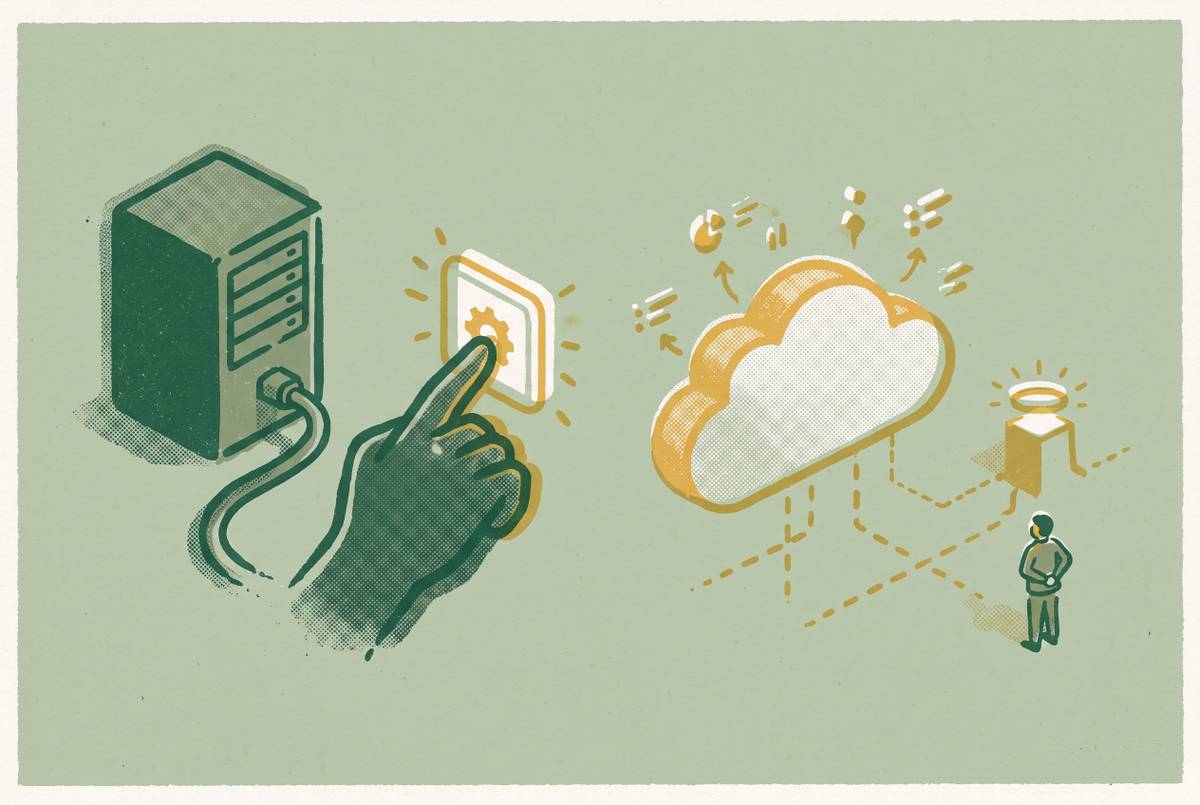
Blaxel's cloud sandbox guide uses the incident of a coding agent deleting a production database to explain why generated code must be treated as untrusted. The failure was the absence of isolation between the agent's execution environment and a system it should never have reached.
That distinction exposes the weakness of comparing sandbox vendors primarily on uptime percentages. API availability says little about containment inside a running sandbox, progress lost when a session drops, or a cold start that stalls an interactive agent. These failures require different evidence. Isolation strength asks whether a failure stays contained, while startup latency asks whether execution starts in time for the agent to use it. State durability asks what progress survives interruption, and compliance posture asks whether the deployment respects the required regulatory boundary.
How the isolation primitive a vendor chooses determines its actual security ceiling
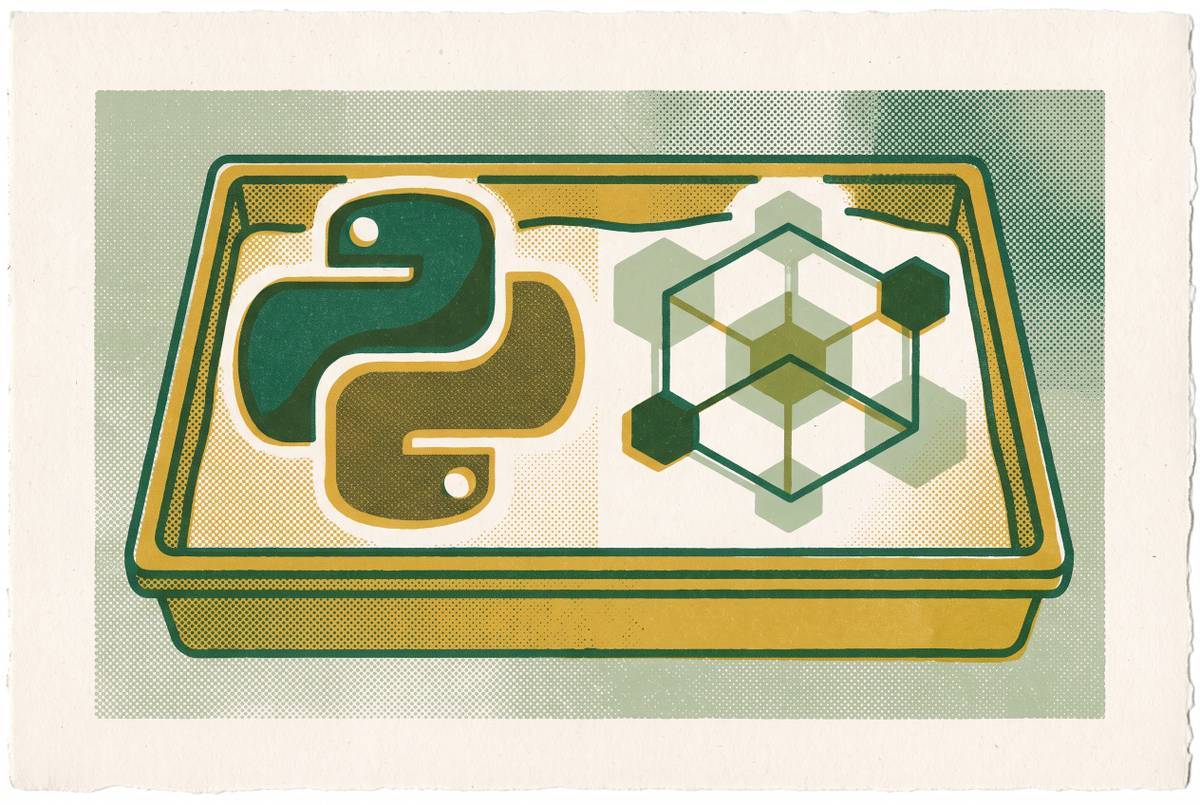
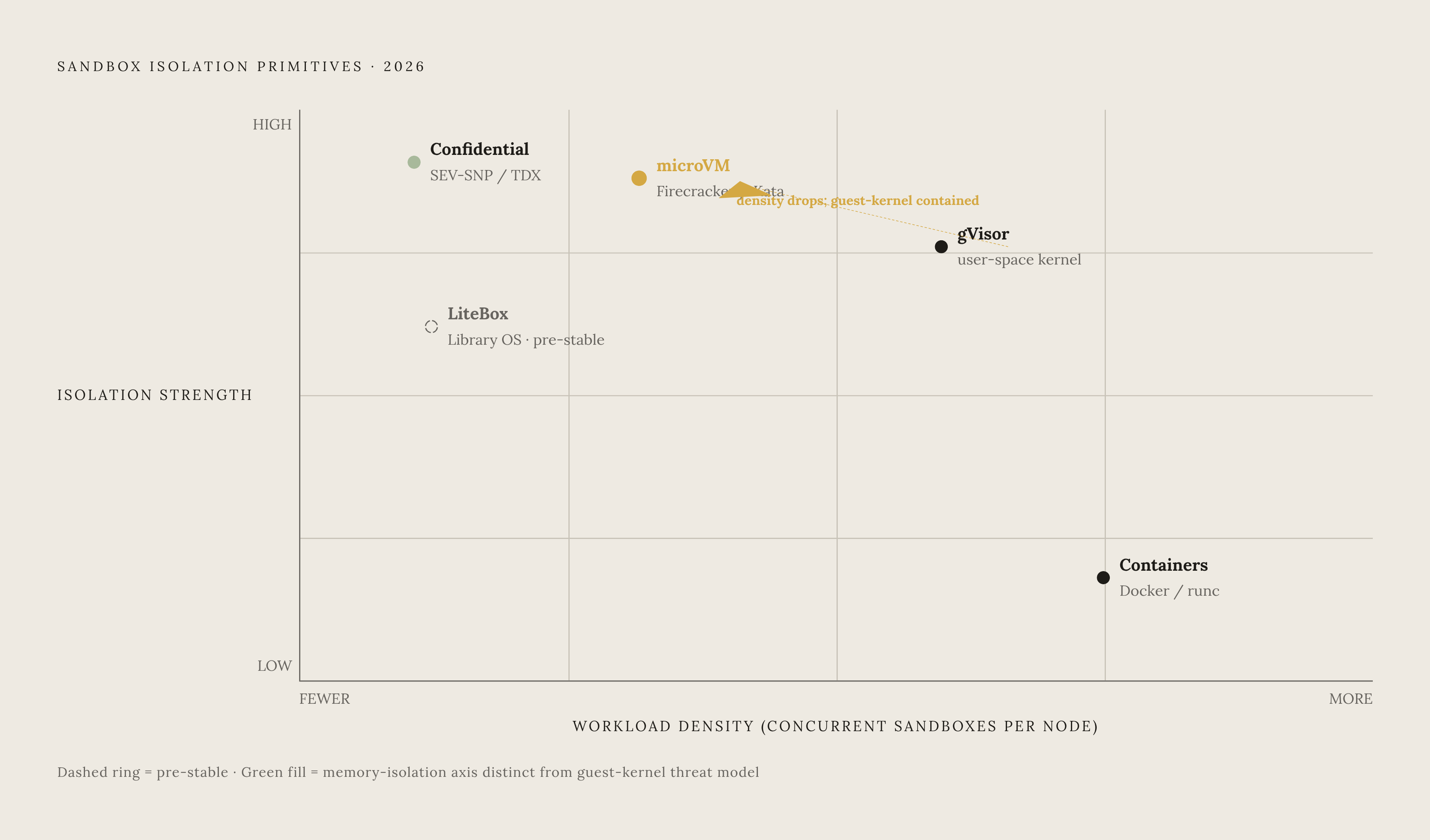
A sandbox's security boundary is largely chosen before its SDK exists. The isolation primitive determines which threats the architecture can contain, so product-level assurances need to be read against that choice. Five approaches frame the landscape described for 2026. They separate workloads at different layers rather than offering interchangeable versions of the same protection.
Plain containers, including Docker/runc, separate processes through Linux namespaces and cgroups but share the host kernel. That boundary works for trusted code that has passed through CI. It is insufficient for LLM-generated or user-supplied code because a kernel vulnerability can affect other containers. User-space kernels such as gVisor instead intercept and re-implement syscalls, reducing direct exposure to the host kernel. This provides stronger separation with less overhead than a full VM, although incomplete syscall emulation can create compatibility gaps.
MicroVMs, including Firecracker and Kata Containers, give workloads separate Linux kernels through hardware virtualization. A guest-kernel exploit is contained by that boundary rather than becoming an exploit of a shared host kernel. AWS built Firecracker for Lambda and Fargate, while Google built gVisor for production workloads including GKE Sandbox, Cloud Run, and App Engine. Azure uses Hyper-V for Dynamic Sessions and hardware-isolated microVMs for its newer ACA Sandboxes.
Library OS designs take a different approach. Microsoft LiteBox links an application against a minimal OS library exposing a small set of controlled primitives, but remains experimental and pre-stable without a production SDK in the 2026 account. Confidential computing, including AMD SEV-SNP and Intel TDX, adds hardware-encrypted memory isolation so that even the host OS and hypervisor cannot read sandbox data. That addresses a distinct concern for regulated workloads.
Stronger separation also changes the economics of density. A Firecracker-isolated node supports fewer concurrent sandboxes than a gVisor node, which supports fewer than a plain-container node. For millions of daily tool calls, gVisor's density advantage can substantially change costs where generated code is not adversarially crafted. Evaluation therefore considers which primitive is strongest, which primitive covers the actual managed, BYOC, or self-hosted configuration and whether its trade-offs match the threat model.
What startup latency commitments actually mean for agents that call sandboxes as tools
When execution is an agent tool call, startup sits directly on the critical path. The Model Context Protocol specification describes a general protocol for connecting LLM applications to external tools and data. An MCP server can nevertheless execute logic that includes creating an isolated environment before returning a result. The agent waits for that result to continue. A several-second cold start consequently stalls the interaction.
What does a vendor mean by “started”? A provisioning response is not equivalent to executing the first useful command if image preparation and dependency loading remain unfinished. The practical test is to measure the whole loop, including creation, preparation, execution, result collection, and cleanup. That measurement connects infrastructure performance to completed agent work rather than to an intermediate API response.
Cold starts and snapshot resumes also serve different patterns. Agents that invoke execution unpredictably depend on new-environment provisioning, while agents returning to a workspace depend on resume speed and snapshot fidelity. Those measurements should not be blended. Vendors should be asked for p99 commitments rather than only averages or medians because bursts of parallel calls expose tail latency. The useful commitment covers time-to-first-command under those conditions.
State durability and what vendors actually preserve across pauses, crashes, and long-running sessions
For an autonomous task lasting hours, reconnecting is not the same as recovering. An agent that loses its working state may need to restart the work. Durability therefore needs a precise object. Does the platform preserve files, live memory, and running processes, or only some of them?
A filesystem snapshot restores files and directories but requires runtime reinitialization. A memory-plus-disk snapshot can preserve execution in progress, allowing processes to continue from where they stopped. An environment deleted on stop offers neither. That model works for stateless, short-lived calls, but a stateful agent has to rebuild what it lost. Blaxel's sandbox platform guide illustrates the fuller snapshot model while distinguishing standby preservation from long-term persistence through separate volumes.
Pause semantics do not, by themselves, establish crash recovery. A reliable commitment should define “persistence” by specifying what survives each relevant interruption. It should also state the maximum standby duration and the idle billing model. How long environments can be kept ready depends in part on whether charges are for storage alone or for compute as well.
Hard caps force application-level checkpointing, so the production plan's limits deserve more attention than the demonstration plan's behavior. Live VM branching is a separate capability. By forking running state into parallel instances, it supports tree-of-thought execution or alternative code changes without rebuilding each branch's environment. A pause-and-resume claim does not establish that this capability exists.
How compliance posture interacts with deployment model, and why a certification that doesn't cover your configuration is no certification at all
SOC 2 Type 2 attestation, ISO 27001 certification, and contractual arrangements such as a HIPAA BAA or GDPR DPA need to be examined against the configuration handling production data. Coverage for the managed cloud does not show that BYOC or self-hosted deployments are covered too.
For financial, healthcare, and government workloads, sending data outside a controlled VPC can trigger regulatory obligations. This can make vendor-managed compute unsuitable even when the vendor has substantial compliance documentation. Deployment becomes a compliance decision. BYOC or self-hosting keeps data within the customer's infrastructure, but some offerings need an enterprise deal while others are self-serve. The isolation boundary must also be re-examined when the compute moves.
Fly.io's documentation describes SOC 2 Type 2 attestation, HIPAA readiness through pre-signed BAAs available with a paid Compliance Package, and GDPR support through a pre-signed DPA. Blaxel's guide lists SOC 2 Type 2, ISO 27001, and HIPAA support. The practical questions are whether the evidence covers the intended configuration, whether the required agreement is available without enterprise negotiation, and where responsibility divides between customer and vendor.
Comparing the major platforms against the four reliability dimensions
Northflank offers microVM and gVisor options depending on configuration, together with custom container images. Its cloud offering claims sub-second boot times and support for thousands of concurrent agent sessions. Parallel execution is the clearest fit. Pause/resume can keep state, but the plan sets the limits on sessions and concurrency. Compliance coverage still needs to be checked for the chosen deployment tier.
Blaxel uses hardware-enforced microVM isolation with a separate kernel per workload. Its guide claims sub-25ms standby resume that brings back the filesystem, memory, and running processes. Higher quota tiers support indefinite standby with storage charges and no compute charges, while lower tiers may impose deletion after a set time. Volumes provide long-term persistence across sandbox deletion. These features and its stated compliance posture make it a fit for stateful agents whose tool calls come at uneven intervals.
Vercel Sandbox uses Firecracker microVMs per session. On its Hobby plan, active sessions can last up to 45 minutes, while Pro/Enterprise plans let them run much longer. Filesystem snapshots preserve only files. Runtime reconstruction is therefore part of returning to work. The service is managed-only without BYOC, making deployment suitability a separate question from its fit for coding agents integrated with Vercel's deployment pipeline.
Fly.io Sprites provides persistent Firecracker microVMs with 100 GB NVMe storage. When environments are unused, charges for compute stop, but charges for storage continue. The infrastructure-level compliance documentation described earlier makes Sprites relevant to healthcare and fintech teams without a BYOC requirement. Persistent storage and idle billing, however, do not themselves supply a startup-latency commitment.
AWS Bedrock AgentCore gives its Code Interpreter and Browser tools dedicated Firecracker microVMs per agent session, with deterministic policy enforcement outside the LLM loop. AWS documents an 8-hour execution window for microVM sessions. Governance is a central distinction. Its hyperscaler compliance coverage makes it a strong fit for organizations that already have AWS enterprise agreements, while the length of a session says little about startup or recovery.
Azure Container Apps Sandboxes provides a hardware-isolated microVM boundary, sub-second startup, and suspend/resume snapshots preserving memory and disk. Microsoft introduced it in public preview at Microsoft Build 2026. Preview status belongs in the evaluation. Microsoft Foundry Agent Service is built directly on Azure Container Apps, making ecosystem integration and hyperscaler compliance breadth relevant for organizations already using the Microsoft stack.
Google GKE Agent Sandbox uses gVisor and has reached general availability. It is built to pack in sandboxes and allocate them at a high rate, which suits teams already on GKE that want open-source isolation without having to depend on another vendor. Together Code Sandbox addresses a different workflow. Together AI's sandbox page describes hibernation that snapshots disk and memory and restores the exact state, making resumable workspaces relevant within Together AI workflows. Both descriptions leave out some of the startup, durability, and compliance commitments needed to compare the contracts in full.
What SLA language to read carefully, and what to ask when it is missing
Most sandbox SLAs emphasize API availability, so silence on execution safety should not be read as coverage. Which isolation primitive applies to the production tier? Does it remain the same under BYOC or self-hosting, and what incident-response and disclosure policies apply to an isolation breach?
Latency language needs an equally concrete reading. Does the commitment cover p99 time-to-first-command, including image preparation, or only a provisioning response? What happens during a burst of parallel requests? A commitment should say how the service runs under load as well as how fast it starts at its best, including whether requests queue and how latency changes.
State terms should identify filesystem, memory, and process preservation separately. They should also establish maximum standby duration, charges while idle, and the mechanism for persistence beyond standby. Crash recovery needs its own answer. Compliance review should then check how the production configuration fits the audit scope and agreements, and where the BYOC shared-responsibility boundary falls.
When isolation infrastructure is public, security teams can inspect the attack surface and test claims for themselves during red-team evaluations. Firecracker and gVisor have public CVE histories that teams can assess. That access gives evaluators visibility unavailable in the same way through a black-box execution service, particularly when the contract says little about isolation.
Why purpose-built infrastructure for AI-generated code produces a different reliability contract than retrofitted developer tooling
Developer tooling often assumes a human author, short interactive sessions, and environments that can be discarded after use. Autonomous execution challenges all three assumptions. Generated code must be treated as untrusted, tasks may continue for hours, and progress may need to survive long pauses without reconstruction. Changing an interface can leave those design choices in place.
Purpose-built infrastructure is designed from the start for those conditions as part of normal use. For enterprise workloads, customer-managed compute and compliance scope likewise belong in the initial design because data-residency and audit boundaries constrain where execution can happen. Docker-native compatibility and open-source infrastructure can make it easier for teams to start using the service while keeping the environments they already have. But the category label alone proves nothing. The practical test remains the same question, does the vendor's architecture reflect your threat model?