AI Coding Agent Platforms Compared for Sandbox Integration
Four key dimensions determine whether an AI sandbox platform can handle production workloads safely.

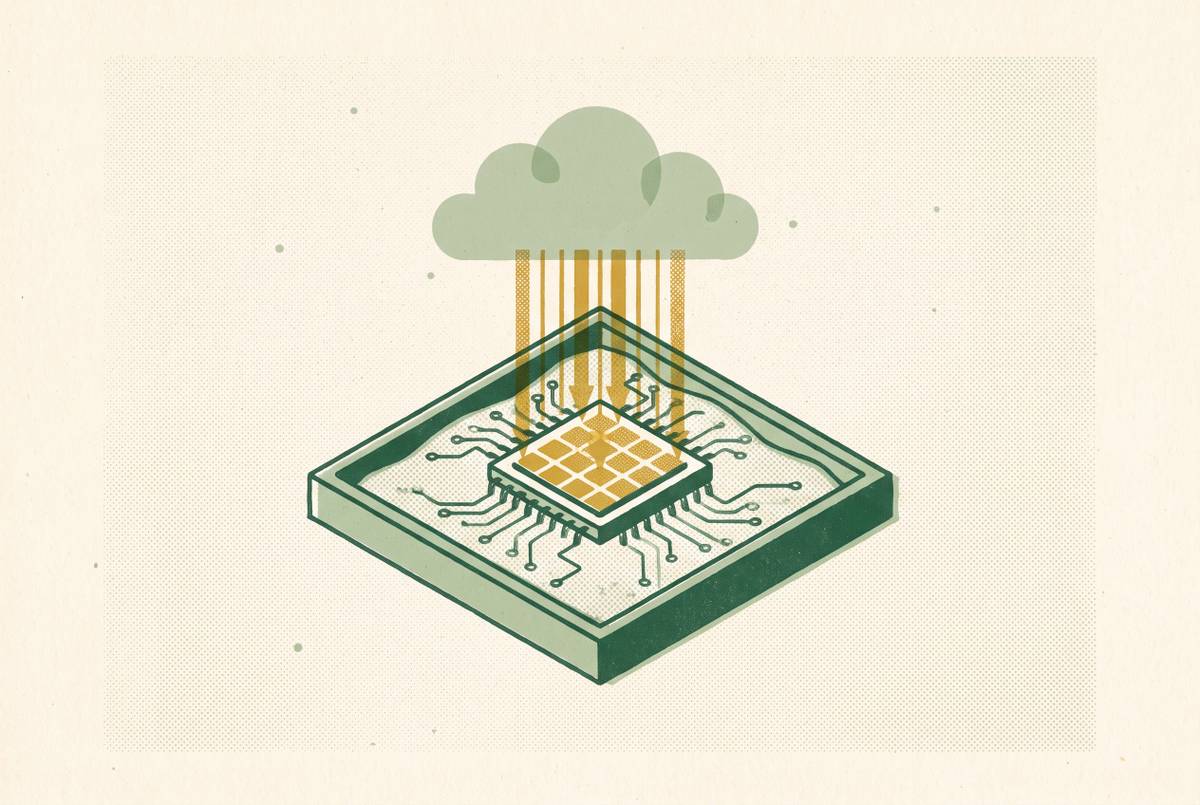
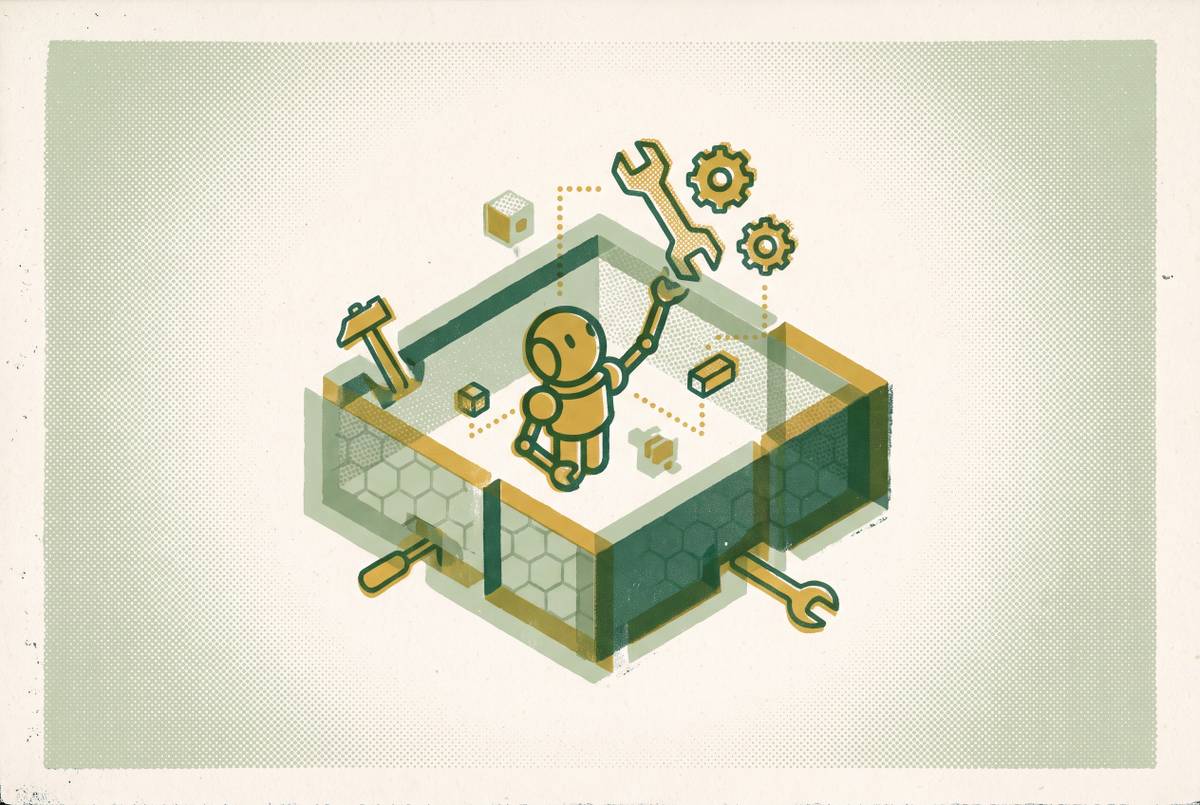
Choosing a platform for AI coding agent sandbox integration means choosing the limits within which the agent can safely work. The defensible choice rests on four dimensions, which are isolation model, startup latency, state persistence, and compliance posture. Their relative weight depends on the failures a workload cannot tolerate.
Why sandbox integration is the decision that determines whether a coding agent ships to production
A demo can show an agent completing a task. In production, it must complete tasks without exposing neighboring workloads, losing state it needs, or breaking the rules for how data is used and stored. The difference lies partly beneath the agent itself. Its sandbox determines how safely it can execute code, how quickly it can begin useful work, and whether it can sustain a task through interruptions.
That dependency is unusually consequential because agents generate and execute novel code from natural language inputs. Unlike traditional application code, their instructions are not fixed at deployment, so conventional controls alone cannot address the execution risk. A Replit AI agent deleting a production database shows why generated code must be treated as untrusted. Isolation must therefore be built into the architecture from the start, before the demo succeeds.
Major coding agents now ship execution environments, and a separate layer of sandbox infrastructure has grown around them. Yet that availability does not make the options interchangeable. A platform can make the first command easy to run while leaving the harder production constraints unresolved.
The four dimensions that actually separate sandbox-ready platforms from ones that only look ready
The scoring rubric starts with isolation, which defines the boundary between agent code and the host kernel. Process-level separation, syscall interception, and hardware-enforced separate kernels provide different protection against a misbehaving workload. Startup latency measures the time from the API call to the first executable command, including image preparation. Cold starts and snapshot resumes are distinct measurements. Neither should stand in for the other when an agent repeatedly creates environments.
State persistence asks what survives a stop, whether that is files, files and memory, or nothing. It also covers snapshot and fork support, including copy-on-write branching, and what happens when a session expires. Compliance posture asks where execution data goes, which deployment configurations certifications cover, and whether customer-managed compute is available.
These four axes organize the comparison that follows. Runtime compatibility, concurrency, and operational controls still influence production fit, but they do not replace the rubric. A fast start cannot compensate for an unacceptable isolation boundary, just as strong isolation cannot recover work that an ephemeral session discards.
What the three main isolation technologies actually protect against — and where each breaks down
Hardware-enforced microVMs, including Firecracker and Kata Containers, give each workload its own kernel. That keeps agent code away from the usual escape paths through a shared host kernel. Firecracker suits untrusted code execution, serverless functions, and AI inference, while Kata uses a virtual machine monitor for hardware-enforced isolation suited to regulated and zero-trust environments. These microVMs cost more to start than containers. Benchmarks comparing Firecracker, Cloud Hypervisor, and libkrun in agent-capability scenarios are less established than Docker/OCI benchmarks, so distinctions between microVM variants rest partly on architectural reasoning.
gVisor instead places a userspace kernel between the workload and the host, intercepting system calls before they reach the host kernel. This gives workloads real protection without the full overhead of a virtual machine and supports more languages than V8 isolates. The boundary differs from hardware isolation. It is stronger than plain containers and suits multi-tenant SaaS and CI/CD workloads.
Standard Docker/OCI containers share the host kernel, and documented container escapes show why that boundary is insufficient for untrusted, multi-tenant agent execution. The CNCF security whitepaper advises VM-based sandbox runtimes for untrusted workloads in multi-tenant environments. V8 isolates take a separate approach by virtualizing the language runtime. They can offer sub-50ms starts, but language support is constrained and additional languages may depend on WebAssembly. A runtime-isolate claim therefore says something different from a full Linux sandbox claim.
How Northflank, Vercel Sandbox, Fly.io Sprites, Cloudflare Sandbox, CodeSandbox, and Freestyle compare across the four axes
Northflank supports custom container images, including microVM-backed configurations, for coding agents, APIs, browsers, and GPU tasks. Northflank’s platform overview describes fast-starting sandboxes with concurrent execution and CPU or GPU resources. Boot times are sub-second, with support for thousands of concurrent agent sessions, while pause and resume preserve state. Plan limits still govern sessions and concurrency. Custom environments and user-supplied images give teams more ways to deploy, but teams still need to check which certifications cover the configuration they use.
Vercel Sandbox uses Firecracker microVMs with a dedicated kernel per sandbox. Filesystem snapshots support fast resume, which remains distinct from cold-start performance. Hobby sessions last up to 45 minutes, while Pro and Enterprise support configurable longer sessions. The default Ubuntu image includes Python and Node.js, with SDKs and a CLI for commands, files, ports, and network controls. This fits Vercel-native agents that need application previews, though enterprises still need to check resource limits and what the certifications cover.
Fly.io Sprites also uses Firecracker microVMs. Its persistence model combines 100 GB of object-backed storage, with NVMe serving only as cache, fast checkpoint and restore, and scale-to-zero billing during inactivity. Installed tools and project files can survive between invocations. Fly.io offers SOC 2 Type II attestation, HIPAA-ready status with pre-signed BAAs through a paid Compliance Package add-on, and a pre-signed DPA for GDPR compliance. That combination makes Sprites relevant to sporadic, stateful workspaces as well as regulated deployments, subject to the applicable coverage.
Cloudflare Sandbox provides isolated Linux environments controlled through Cloudflare Workers and a Durable Object. Its APIs cover commands, files, background processes, output streaming, and service exposure, while the sandboxed code runs in a full Linux container accessible to any agent framework. Its cold starts are sub-second, and its orientation is ephemeral. Product boundaries are important here. The separate Dynamic Workers product offers sub-5ms starts for JavaScript/WebAssembly, which is a different environment from the full Linux execution environment described here, so that figure cannot be used to score Sandbox’s startup axis.
CodeSandbox, also called Together Code Sandbox, uses microVM-backed environments with fast snapshot starts. Its persistent development-environment sandboxes support hibernation, cloning, and configurations up to 64 vCPU. Shared base environments make it relevant to reproducible workspaces and parallel agent tasks. Expensive setup can be completed once before branching into tasks. Its documented persistence capabilities are clearer here than its compliance posture, so certification coverage remains an unanswered part of the comparison.
Freestyle provides full Linux VMs with nested virtualization. VMs resume quickly, support full-machine-state snapshots, and can fork without pausing the running VM, while larger RAM allocations accommodate memory-intensive work. Paused VMs incur storage charges but no compute charges. Memory preservation distinguishes this model from filesystem-only recovery. Those features fit long-running work that needs live forking, though the supplied compliance details do not establish a certification stack for this option.
Why state persistence is the axis most teams underweight until their agent fails mid-task
The comparison exposes a question that startup benchmarks cannot answer. What is left when the agent stops halfway through useful work? A fresh ephemeral sandbox starts for one task and is then destroyed, paying cold-start costs on every invocation and retaining no accumulated state. That simplicity helps when tasks are independent. It becomes a constraint when an agent depends on tools, files, or execution state built during earlier work.
Persistent paused environments preserve filesystem and memory snapshots so that execution can resume where it stopped. This avoids repeated cloning, installation, and authentication, but only when the platform preserves the state the task actually needs. Filesystem persistence alone does not imply memory persistence. Snapshot and fork models address a different need by branching copy-on-write environments from a parent with dependencies already installed, allowing parallel tasks to share expensive preparation.
The agentic workload characterization preprint identified as arXiv:2608.15127 describes evictable KV caches, persistent correctness state, and sandbox working sets reaching tens of gigabytes. The practical implication is to checkpoint correctness state at quiescent boundaries rather than arbitrary intervals, while provisioning transient memory peaks separately. Even with snapshots, session duration remains an independent constraint. Vercel’s 24-hour cap on Pro and Enterprise creates a boundary that longer workflows must accommodate, whereas Freestyle’s full-state model and CodeSandbox’s hibernation and cloning address different forms of continuity.
How compliance requirements change the sandbox decision for enterprise and regulated-industry teams
Enterprise sandbox selection is also a choice between data-processing architectures. When managed execution routes through third-party infrastructure, it introduces a third-party processor into the compliance chain. Depending on the data, that brings GDPR processing agreements, HIPAA Business Associate Agreements, and scrutiny of the provider’s security posture. The customer’s own controls are not enough. The execution path must fit the obligations attached to the data.
Certifications support that assessment only when their scope matches the deployment. SOC 2 Type II is a baseline for B2B enterprise use, but coverage for managed cloud does not automatically extend to BYOC or on-premises configurations. Running healthcare workloads needs the right HIPAA arrangements and a BAA, and more European enterprise customers now expect ISO 27001. Fly.io’s stated combination of SOC 2 Type II, HIPAA-ready arrangements, and GDPR documentation supplies evidence across these needs. Another platform may have coverage even if evidence of it is missing.
BYOC keeps execution data inside the customer’s cloud account and can remove the provider from the processing chain for most purposes. That benefit depends on how the workload is deployed and what the certifications cover. A managed-service badge cannot answer a BYOC coverage question.
What purpose-built agent runtimes offer that repurposed developer sandboxes structurally cannot
Developer sandboxes often assume a human will decide when to start, stop, or recover a session. Autonomous agents violate that assumption through overnight jobs, repeated provisioning, and branches that need no human approval. Session timers can become task failures, while acceptable preview startup delays accumulate across agent invocations. Adding a command-execution API does not by itself replace the lifecycle beneath it.
Purpose-built agent runtimes instead treat rapid startup, stateful operation, uncapped runtime, and isolation for machine-written code as design requirements. Human-oriented lifecycle controls cannot support autonomous branching unless the underlying platform exposes that operation. Similarly, compliance arrangements for individual developer accounts do not by themselves address hundreds of isolated agent sessions on shared infrastructure.
Transparency gives teams another way to assess those claims. A black-box execution service limits their ability to audit what happens to generated code or examine the declared isolation boundary. Open-source infrastructure can support that scrutiny, while Docker-native compatibility allows existing container images to bridge the transition without a stack rewrite. BYOC can also preserve customer control over execution data. None of these properties substitutes for the four-axis assessment, but each can make its answers more inspectable or easier to adopt.
How to apply the four-axis framework to make a defensible platform choice
Teams first need to decide which failures they cannot accept. For untrusted multi-tenant execution, plain container isolation is disqualifying. For latency-sensitive agents, cold-start behavior may be non-negotiable, while long-running tasks make persistence decisive and regulated data makes compliance a gate. Several gates may apply at once. Averaging the scores would conceal a failure on any one of them.
To test useful work, Northflank’s evaluation guide recommends measuring the complete loop from sandbox creation through workspace preparation, execution, result collection, and cleanup. That test should distinguish fresh starts from resumed environments and expose the cost of repeated setup. Certification coverage then needs confirmation for the specific deployment model. Concurrency testing should also check account quotas, creation-rate limits, and how quickly capacity becomes available during bursts.
These tests turn the comparison into a workload-specific shortlist. Northflank addresses high-concurrency agent execution, Vercel fits its existing application workflow, and Sprites supports persistent project state with documented compliance arrangements. Cloudflare fits Workers-controlled Linux execution, CodeSandbox supports reusable branched environments, and Freestyle supports memory-preserving VM workflows and live forks. A defensible selection explains which failure modes the chosen platform prevents, which constraints remain, and why those constraints are acceptable for the agent being shipped.