Integrating Checkov Scans into GitHub Actions for Sandbox CI
Catch infrastructure misconfigurations before sandbox code runs live.
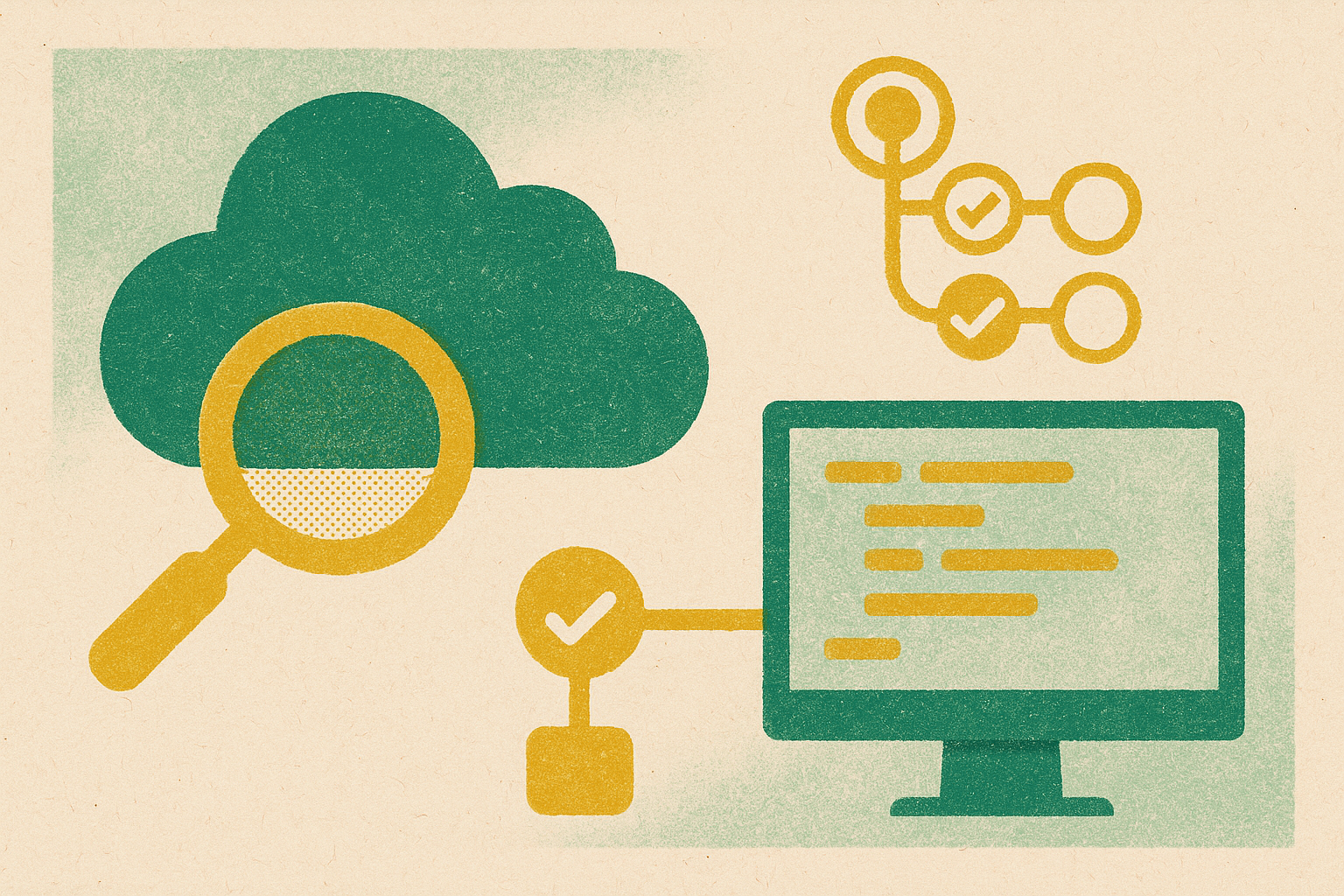
This piece is about integrating Checkov, an open-source infrastructure-as-code scanner, into GitHub Actions to catch security misconfigurations before sandbox environments ever go live. Sandbox CI is different from ordinary CI because the environments it provisions are where untrusted code, often AI-generated, actually runs. The Terraform, Kubernetes, and Dockerfile configs defining those environments function as a security boundary, and this article walks through exactly how to wire Checkov into that boundary from the workflow file to the policy library.
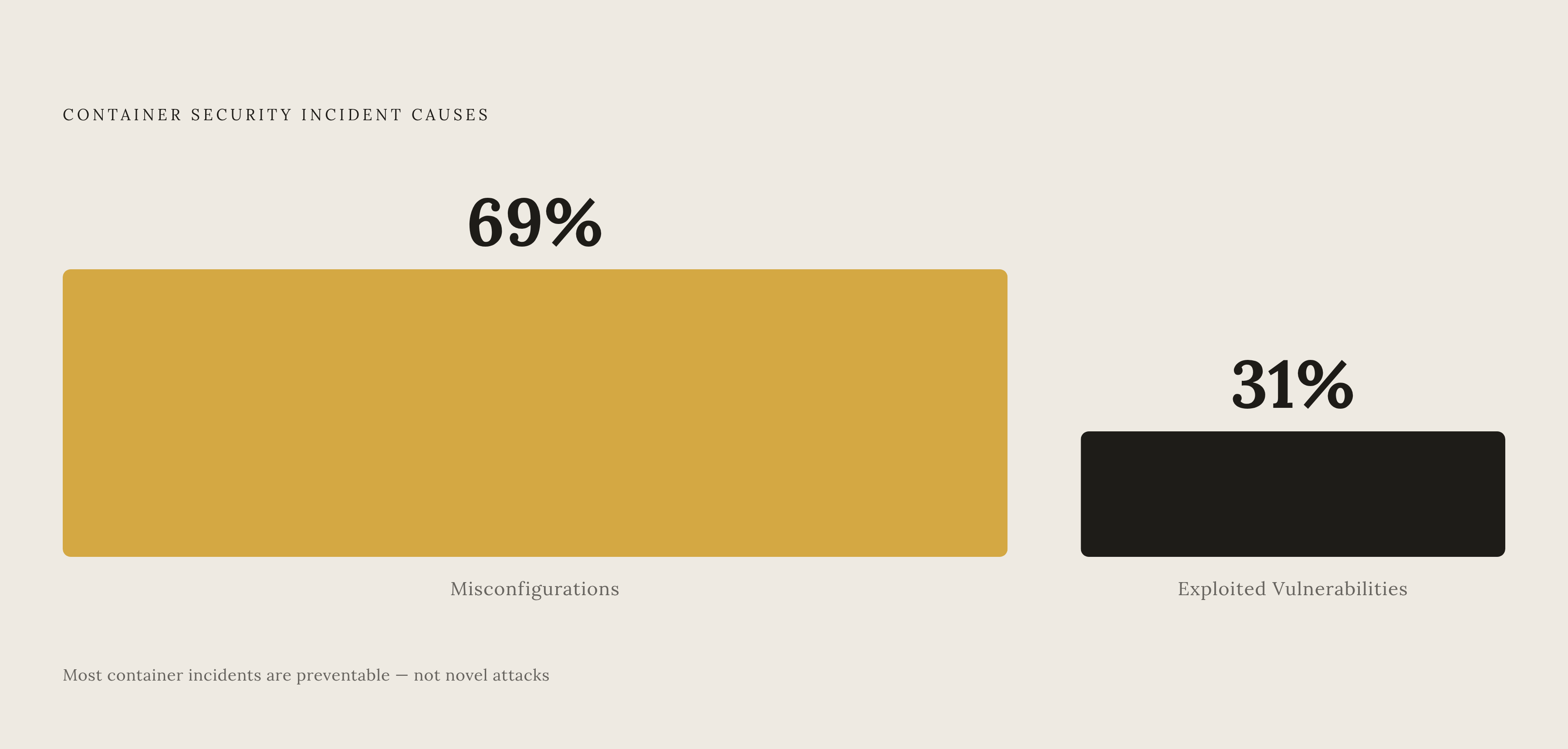
Here's the thing about container security incidents: 69% of them trace back to misconfigurations rather than exploited vulnerabilities. That points to an operational discipline gap, and it means the highest-leverage move a team can make is catching a bad security group rule or an overly permissive IAM policy before the terraform apply ever runs. Once a sandbox is provisioned with the wrong isolation settings, hardening it after the fact is a much harder problem than rejecting the pull request that would have created it. AI agents make this worse before they make it better: a single autonomous coding agent can open a dozen PRs in an afternoon, each one propagating the same flawed IaC pattern across a dozen repos before any human notices. Manual review at PR time doesn't scale against that. Automated static analysis gating every push does.
What Checkov is and why it fits this problem better than generic linters
Checkov is an open-source static analysis tool maintained by Bridgecrew (now part of Prisma Cloud), built specifically for infrastructure-as-code rather than application code. It scans Terraform files, CloudFormation templates, Kubernetes manifests, Dockerfiles, and Helm charts for the kinds of misconfigurations that turn into actual security incidents.
What separates Checkov from a simple rule-checker is graph-based scanning. Instead of evaluating each resource block in isolation, Checkov builds a graph of how resources in your IaC relate to each other. A security group that looks perfectly reasonable on its own might be attached to an EC2 instance with a wildcard IAM policy, and that combination is the actual risk, not either piece alone. A linter that checks resources one at a time would miss that connection entirely. Checkov catches it because it understands the relationship.
The policy library itself is substantial: over 3,000 built-in checks mapped to CIS benchmarks, the AWS Well-Architected Framework, and PCI-DSS controls. For teams that need to demonstrate SOC 2 or HIPAA coverage for the infrastructure running their sandboxes, that mapping cuts an audit that would take a month of manually cross-referencing controls down to an afternoon.
Checkov also outputs in whatever format the consumer needs: CLI text for a developer debugging locally, JSON, JUnit XML, GitHub-flavored Markdown, and SARIF. SARIF is the one that matters most for what we're building here, and we'll get into why in a few sections. Worth noting too: some emerging SecOps toolkits expose Checkov directly to AI coding agents as a skill, so the agent validates its own generated IaC against CIS and HIPAA benchmarks before it even opens the PR. That's a preview of where this is heading, but most teams should start with the GitHub Actions integration.
How the Checkov GitHub Action is structured and what each parameter controls
The official integration is bridgecrewio/checkov-action, listed on the GitHub Marketplace, and it wraps the Checkov CLI in a form that's easy to drop into a workflow YAML file.
A handful of parameters do most of the work. The directory or file input tells Checkov what path to scan; you'll usually point it at your terraform/ or k8s/ directory rather than the whole repo. The framework parameter takes a comma-separated list, terraform, kubernetes, dockerfile, and scopes the scan to whatever your repo actually contains. Running Kubernetes checks against a repo with no manifests serves no purpose.
outputformat can emit multiple formats at once, so cli,sarif gives you readable logs in the Actions run and a machine-readable file for upload in the same pass. Then there's softfail and softfailon, which are the actual enforcement levers. Leave softfail: false, the default, and any policy violation fails the pipeline outright. Set softfail_on: LOW,MEDIUM and findings at those severities annotate the PR without blocking the merge, while anything above still fails the build. That's the dial teams turn as they mature their adoption, and we'll come back to it.
downloadexternalmodules: true matters more than it sounds like it should. Skip it, and Checkov silently ignores external Terraform modules, so whatever misconfigurations live inside a third-party module never get scanned at all. baseline points to a .checkov.baseline file, the mechanism that makes adopting Checkov on an existing codebase survivable instead of a productivity-crushing event. More on that later.
Two permissions the workflow job needs to declare up top: security-events: write, required for SARIF upload, and actions: read, required if you're working in a private repository. If your Terraform pulls modules from private repos, you'll also need to pass a GitHub personal access token so Checkov can actually fetch those sources during the scan rather than failing on an authentication error.
Building the workflow file: triggers, path filters, and job ordering
Trigger on both push to your main branch and pull_request. The PR trigger is where the gate actually matters, since that's the checkpoint before anything merges, but you want push-based scanning too as a backstop for whatever slips through.
Path filtering keeps this from wasting Actions minutes. Scope the pull_request trigger to terraform/, k8s/, Dockerfile, and if your sandbox setup uses Helm, add helm/* too. A commit that only touches application code in src/ has no business kicking off a full IaC scan.
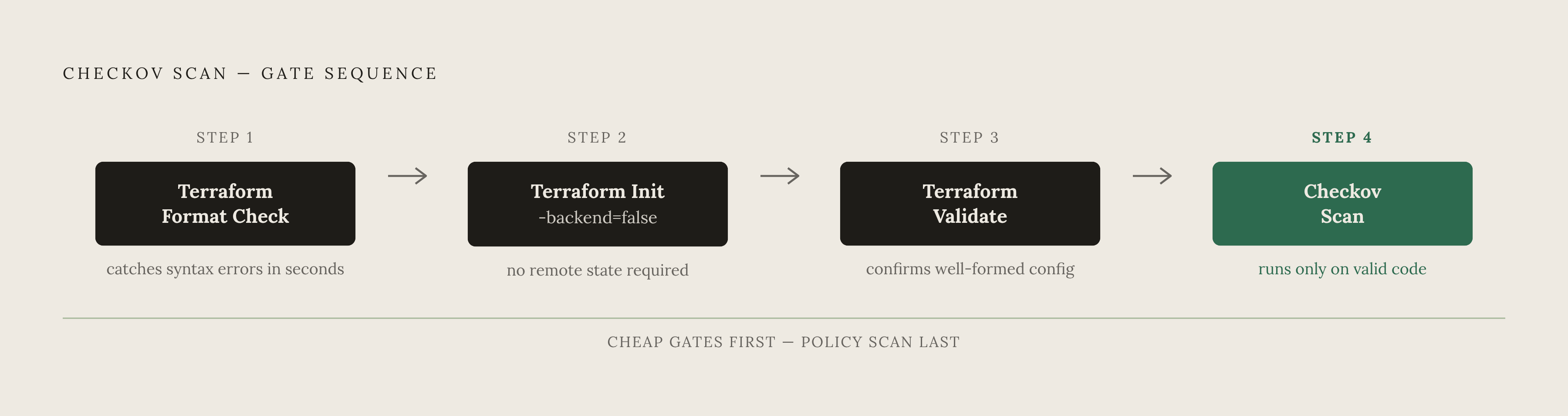
Job ordering is where a lot of teams get sloppy, and it costs them. The sequence that works: Terraform Format Check first, then Terraform Init with -backend=false since static analysis doesn't need state access, then Terraform Validate, and only then the Checkov scan. Format and validate are cheap and catch syntax errors in seconds; there's no reason to burn the heavier policy scan on a file that has a missing comma.
on:
  push:
    branches: [main]
  pull_request:
    paths:
      - 'terraform/**'
      - 'k8s/**'
      - 'Dockerfile*'

jobs:
  checkov-scan:
    runs-on: ubuntu-latest
    permissions:
      security-events: write
      actions: read
    steps:
      - uses: actions/checkout@v4

      - name: Run Checkov
        uses: bridgecrewio/checkov-action@master
        with:
          directory: terraform/
          framework: terraform,kubernetes,dockerfile
          output_format: cli,sarif
          soft_fail_on: LOW,MEDIUM
          download_external_modules: true
          baseline: .checkov.baseline

      - name: Upload SARIF
        uses: github/codeql-action/upload-sarif@v3
        if: always()
        with:
          sarif_file: results.sarif
One more technique worth adopting: scan the Terraform plan, not just the raw source. Run terraform plan -out tfplan, convert it with terraform show -json tfplan > tfplan.json, then point Checkov at that JSON file instead of the source directory. Why does this matter? Because a lot of misconfigurations only become visible after variable interpolation. Source-only scanning can miss a security group rule that resolves to 0.0.0.0/0 only once a variable gets filled in at plan time. Scanning the plan catches what scanning the source alone would let through.
Sandbox-specific checks that Checkov catches and why each matters for untrusted code execution
This is the part that actually justifies all the workflow plumbing above. What is Checkov looking for that matters specifically when the workload being provisioned is going to execute code you don't trust?
Start with containers. Checkov flags privileged: true in Dockerfiles and Kubernetes specs, and this one deserves attention because a privileged container can, under the right conditions, break out to the host. In a sandbox context, that's not a theoretical edge case; that's the entire isolation model failing at once. Related to this: Checkov checks for containers running as root via the user directive, and sandbox workloads running untrusted code should never run as root inside the container, full stop. It also flags missing CPU and memory limits. Without those, one runaway AI-generated workload (an infinite loop, a memory leak, a fork bomb) can starve every other tenant sharing that node.
On the Kubernetes side, Checkov enforces allowPrivilegeEscalation: false, checks for the presence of network policies, and flags manifests that skip a read-only root filesystem where one is appropriate. The network policy check is easy to underrate. A compromised sandbox pod can reach internal services it has no business touching if that policy is missing, and Checkov catches namespaces where it's simply absent, before the manifest is ever applied.
Then there's the cloud IaC layer, mostly Terraform. Checkov flags overly permissive IAM: wildcard actions or wildcard resources attached to sandbox execution roles, which is one of the more common ways a scoped-down sandbox quietly turns into a much bigger blast radius. It flags security groups open to 0.0.0.0/0 on ports that have no business being internet-facing; a sandbox environment generally shouldn't be reachable from the open internet at all. It also checks for encryption at rest and in transit on any storage or queue the sandbox touches.
None of these require a CVE. None of them require a zero-day or a novel exploit technique. Each one is an operator error: a config file that got copy-pasted from a tutorial or left over from a debugging session. Checkov catches every one of them statically, before the infrastructure exists.
Using SARIF output to surface findings inside GitHub pull requests
SARIF (Static Analysis Results Interchange Format) connects Checkov's findings to GitHub's own security tooling. Once the scan runs and you upload the results file with github/codeql-action/upload-sarif, two things happen automatically.
Findings show up as inline annotations directly on the diff in the pull request, pointing at the exact line of Terraform or the exact line of a Kubernetes manifest that triggered the policy. They also land in the repo's Security tab under Code scanning alerts, which gives you a running history to track trends over time rather than a one-off pass/fail signal that disappears after the PR merges.
Each finding links out to a remediation guide, and this matters more than it might seem. Flagging a problem is only half the job; a developer staring at "CKVAWS23: Ensure every security group rule has a description" needs to know what to actually do about it, and the remediation link closes that gap.
Running both output formats together (cli,sarif) serves two different audiences at once. The CLI output is what a developer scrolls through while debugging a failed Actions run. The SARIF file feeds the Security dashboard a security engineer checks once a week across every repo in the org. Same scan, two consumers, no extra work.
Severity gating through softfailon is the calibration knob here. Set it to LOW,MEDIUM and those findings annotate the PR without blocking merge, while HIGH and CRITICAL findings still fail the build. As a team's Checkov adoption matures and the noise floor drops, that threshold can tighten.
One anti-pattern worth naming directly: running Checkov in CI but never uploading the SARIF output. The scan still runs, the logs still get written, but nobody sees the findings unless they go dig through Actions logs manually, which almost nobody does. At that point the scanner is producing logs nobody reads, spending Actions minutes without delivering the actual benefit.
Adopting Checkov on existing infrastructure without blocking every open PR
Here's the problem every team runs into the moment they try to turn Checkov on for real: existing infrastructure has years of accumulated findings, and if the first scan blocks every open PR until all of it gets fixed, nobody's going to want to keep the gate turned on.
The baseline feature solves this. Run checkov --create-baseline against your existing code and it generates a .checkov.baseline file that records every finding present today. Point the baseline parameter at that file in your workflow, and from that point forward, only new findings introduced by the current PR fail the pipeline. Existing debt gets acknowledged and tracked, without blocking unrelated work.
That's what actually makes adoption possible. New projects start clean from day one. Legacy infrastructure gets Checkov coverage immediately, without requiring a remediation sprint to happen first just to turn the gate on. The baseline file itself should be committed to the repo, not gitignored, and reviewed periodically as a record of known technical debt that gets revisited rather than forgotten.
Severity gating works as a complementary ramp alongside the baseline. Start with softfailon: LOW,MEDIUM,HIGH, so only CRITICAL findings block anything, then tighten that threshold sprint by sprint as the backlog shrinks. Combine the baseline for existing findings with severity gating for new ones, and you get an adoption curve that doesn't crater the team's velocity in week one.
Writing custom policies for sandbox-specific rules Checkov doesn't cover out of the box
Three thousand built-in policies cover a lot of ground, but they can't cover rules specific to how your organization runs sandbox infrastructure. That's what custom policies are for, and Checkov supports two ways to write them: Python, which gives full programmatic access to the resource graph and is more expressive, or YAML, which is declarative and a lot more approachable for teams without deep Python fluency on the security side.
The convention is a custom_policies/ directory in the repo, passed to Checkov via the --external-checks-dir flag. A few examples that come up constantly in sandbox contexts: mandatory tagging policies that require Owner, Environment, and CostCenter tags on every sandbox-related resource, since SOC 2 and ISO 27001 auditors routinely ask for exactly this kind of ownership and cost attribution trail. Another common one enforces a maximum TTL or an auto-destroy tag on ephemeral sandbox infrastructure, so environments spun up for a single test run don't quietly persist for months and become forgotten attack surface. A third restricts sandbox IAM roles to a narrow, pre-approved set of allowed actions; any deviation from the template fails the scan immediately.
Custom policy findings flow into the same SARIF output as the built-in checks, appearing side by side in the Security tab rather than in some separate system nobody checks. For teams working toward SOC 2 or HIPAA, this turns control requirements from a checklist document that someone updates once a year into executable, version-controlled rules that run on every single pull request.
Where Checkov fits inside a broader secure sandbox runtime
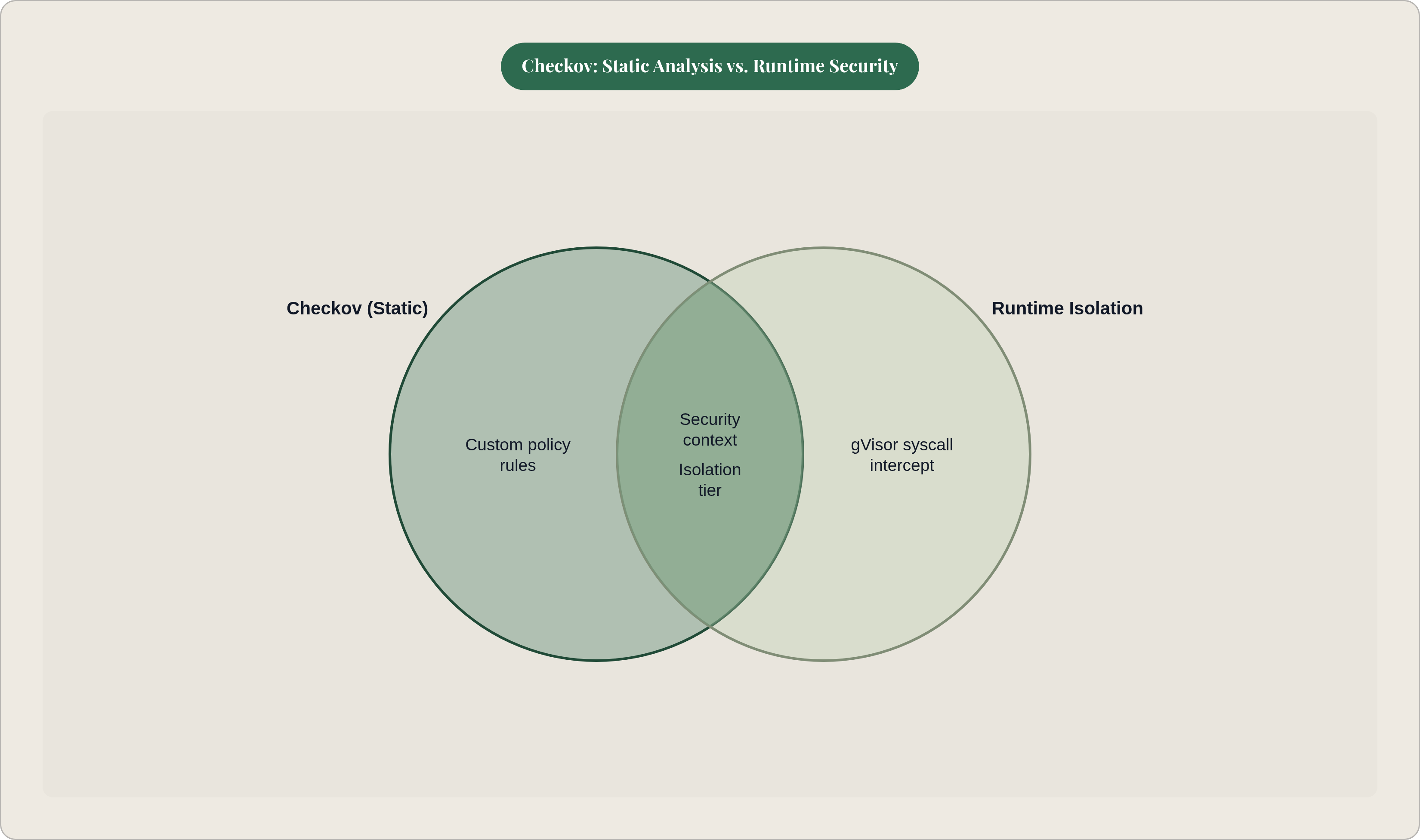
Checkov catches misconfiguration before infrastructure gets provisioned. It has no visibility into what happens after terraform apply runs and the sandbox is live, so its role is bounded to that pre-provisioning window.
Defense-in-depth for sandbox CI needs all the layers together: IaC scanning at the front gate, runtime isolation once the environment exists, network policy enforcement while it's running, and access controls wrapping the whole thing. Runtime isolation itself comes in tiers, and picking the right one is its own decision. Standard containers with a properly configured security context are fine for low-risk, internally trusted workloads. gVisor adds syscall-level interception for moderate-risk cases, intercepting the calls a container makes to the host kernel rather than trusting the container runtime's own boundary. MicroVMs (Firecracker or Kata Containers) give you hardware-level isolation for the workloads that really are untrusted or genuinely multi-tenant; that's the highest overhead option but also the strongest guarantee.
Here's where Checkov and runtime isolation actually connect: the Terraform or Kubernetes manifest that provisions a sandbox also determines which isolation tier it gets. A missing gVisor annotation, a security context that got copy-pasted wrong, a resource spec that silently drops a setting during a refactor: any of these can downgrade a workload from microVM isolation to a standard container without anyone noticing until something goes wrong. Checkov catches that gap while it's still text in a pull request, before it becomes infrastructure someone has to explain during an incident review.
This applies regardless of what platform is actually running the sandboxes. Teams building on purpose-built sandbox runtimes (something like Daytona, which offers stateful environments, sub-100ms provisioning, and SOC 2, HIPAA, and GDPR compliance out of the box) still write Terraform or Kubernetes manifests to configure how those environments get deployed. That IaC layer needs scanning regardless of how capable the underlying runtime is. Checkov scans the configuration that defines the platform, whatever that platform happens to be.
There's also something worth sitting with in Checkov's own design choice here: the policy library is open source, fully inspectable, extensible by anyone who wants to write a custom check. That reflects the same principle that should govern the sandbox runtime itself: security infrastructure that a team can inspect is infrastructure they can verify, and given what's at stake when the workload being isolated is code nobody's vetted, verifiability is the standard worth building toward.